



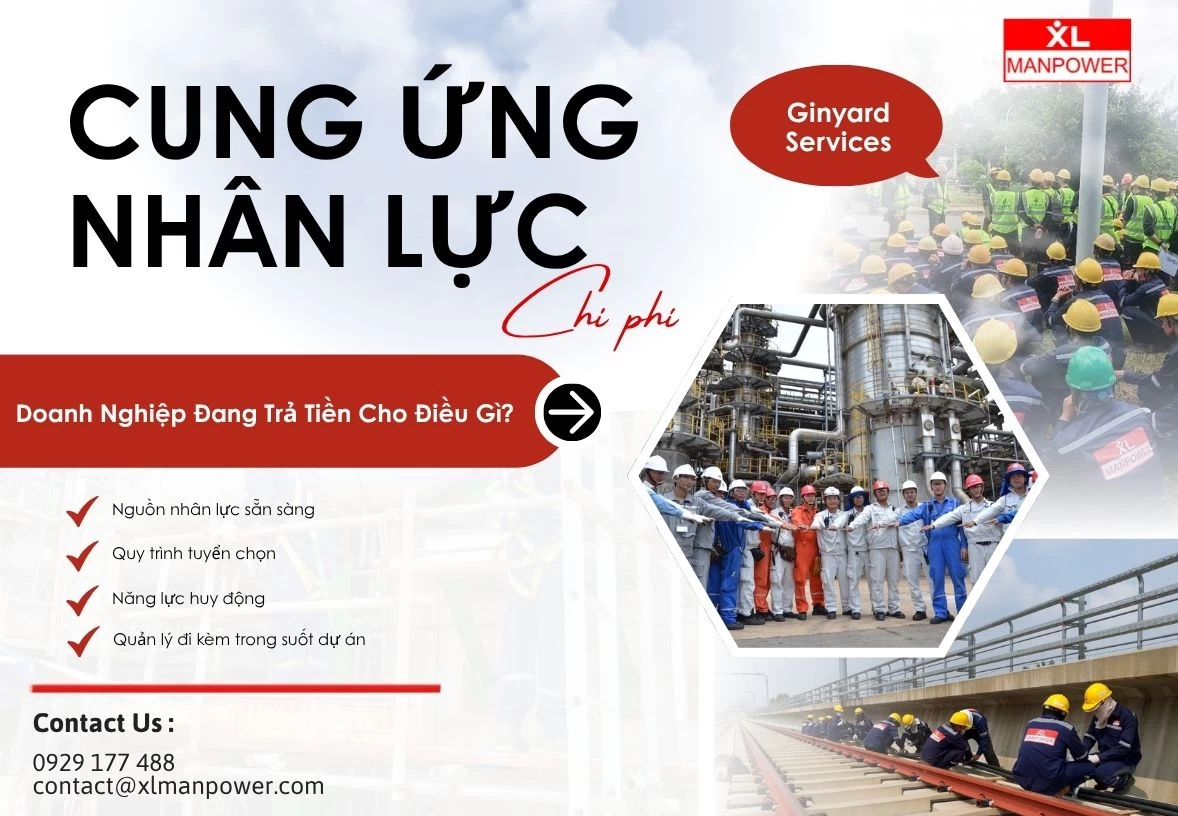
How Much Does Manpower Supply Cost? An Expert Perspective for Businesses
The cost of manpower supply is one of the first questions most businesses ask when they begin looking for a workforce solutions provider. However, the more important question is not “How much does it cost?” but rather, “What exactly is the business paying for, and what value does it receive in return?”
In practice, for the same hiring requirement, businesses may receive significantly different quotations from various workforce supply companies. Some providers offer prices that are 20–30% lower, while others quote considerably higher rates. This difference is not simply a matter of recruitment costs; it reflects the quality of the workforce, mobilization speed, management capability, and each provider’s ability to ensure project schedule compliance.
In industries such as manufacturing, EPC, oil and gas, power plants, and heavy industry, labor costs represent only a small portion of the total project budget. A delay of just a few days in mobilizing engineers, technicians, or skilled workers can result in equipment idle time, increased overtime expenses, contract extensions, or even project delay penalties. Conversely, partnering with a workforce provider that has strong deployment capabilities can help businesses save far more than the price difference shown in the quotation.
With extensive experience delivering workforce supply solutions for numerous industrial projects across Vietnam, XL Manpower will explain how businesses should evaluate workforce service costs, identify the key factors that truly determine quotations, and optimize their workforce budget while maintaining high-quality human resources.
Manpower Supply Costs – What Are Businesses Really Paying For?
Manpower Supply Costs are not simply the fees associated with recruiting employees. They represent an investment in the ability to mobilize the right people, with the right skills, at the right time while ensuring project schedules are maintained. A reasonable quotation should reflect not only labor costs but also the quality of the workforce, management processes, and the supplier’s deployment capabilities.
When comparing quotations, many businesses focus only on the final price. However, in workforce supply services, companies are actually paying for four core values:
Ready-to-deploy workforce: A workforce supplier must maintain a large and qualified talent network capable of responding to staffing requirements within a short timeframe. This is the key factor that determines deployment speed.
Screening and selection process: Candidates’ qualifications, technical skills, certifications, and work experience must be thoroughly verified before deployment. Assigning personnel who lack the required expertise can result in losses that far exceed the initial recruitment cost.
Workforce mobilization capability: Providing 100 workers within five days is fundamentally different from supplying 20 workers over the course of a month. Rapid mobilization requires greater organizational capacity, more resources, and therefore higher operating costs.
Project workforce management: This is one of the most overlooked aspects by businesses. It includes attendance management, workforce replacement, handling employee turnover, on-site support, and close coordination with the project management team throughout the project lifecycle.
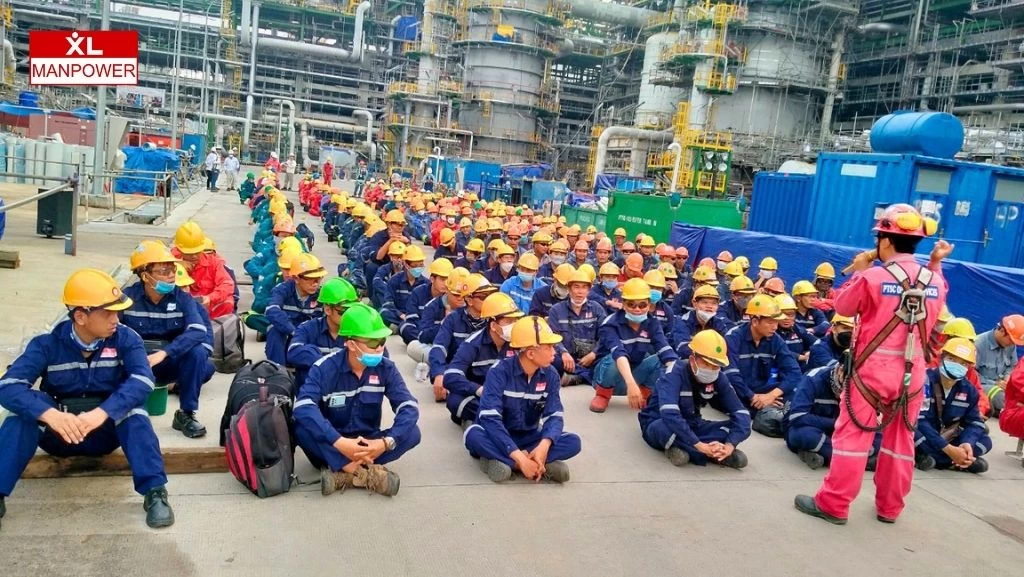
Therefore, when evaluating workforce supply costs, businesses should view them as the investment required to secure a fully operational workforce management system rather than simply the cost of recruiting workers.
Why Do Manpower Supply Quotes Vary So Widely Between Companies?
Differences in manpower supply costs stem from the quality of the workforce, mobilization speed, selection processes, implementation experience, and the management capabilities of each provider. A low quote is not necessarily the optimal choice if significant additional costs arise during execution.
This is a question almost every business asks when receiving multiple quotes for the same hiring requirement.
In reality, the price difference does not simply reflect whether a service is “expensive” or “cheap”; rather, it reflects the level of risk the business must shoulder itself.
What do low price quotes often entail?
- Lack of a backup talent pool.
- No skills verification prior to deployment.
- Slow personnel replacement when issues arise.
- Minimal on-site management support.
Higher, yet professional, quotes typically include:
- A pool of pre-screened candidates.
- Commitment to deployment timelines.
- On-site management teams.
- Clear personnel replacement procedures.
- Support for resolving issues that arise during the project.
A real-world example:
An EPC general contractor required 150 mechanical workers for a 10-day period. Contractor A submitted a quote that was 15% lower but could only mobilize 90 workers on time. Consequently, the installation schedule was delayed by four days, incurring additional costs for equipment downtime, overtime, and construction rescheduling. The total cost of these overruns far exceeded the initial price difference.
This is why major industrial enterprises often evaluate suppliers based on total operating costs rather than focusing solely on unit prices.
Three Key Factors Determining Workforce Supply Costs
The three factors that largely determine the cost of workforce supply are workforce quality, mobilization speed, and project complexity. These factors also directly impact a business’s operational schedule and risk profile.
Workforce Quality
An engineer with experience in power plant projects or a fully certified QC inspector commands a higher supply cost than general labor. However, in return, the business saves on training time, minimizes technical errors, and avoids the need for mid-project personnel replacements.
Mobilization Speed
The cost of mobilizing 200 workers in five days differs significantly from mobilizing the same number over 30 days. The tighter the timeframe, the greater the demands on the candidate pool and coordination capabilities.
Project Complexity
Projects involving plant shutdowns, offshore operations, LNG, or EPC contracts entail far stricter safety and technical standards than standard manufacturing. This drives up costs associated with recruitment, certification verification, and on-site management.
Instead of asking, “What is the lowest price?”, businesses should ask, “What cost level ensures the project meets its schedule with minimal risk?” This is the approach adopted by major industrial enterprises when selecting workforce supply partners.
What Criteria Should Businesses Use to Evaluate Workforce Supply Costs?
Workforce supply costs should not be evaluated based solely on unit rates. To optimize investment efficiency, businesses need to consider the provider’s overall recruitment capabilities, speed of supply, personnel quality, management capabilities, and contractual commitments.
When selecting a partner, many businesses tend to prioritize providers offering the lowest quotes in hopes of saving money. However, in reality, a low price does not equate to a low overall cost. It is crucial for businesses to evaluate the total value delivered by the service rather than focusing merely on the figures in the quotation.
A professional workforce supplier does more than just provide personnel; they help businesses alleviate recruitment pressure, mitigate operational risks, and ensure production schedules are met. These are the factors that generate long-term value.
The Ability to Mobilize Workforce at the Right Time
In manufacturing and industrial projects, time is one of the most critical factors. A production line that remains idle for just a few days due to a shortage of workers can cost a business far more than the price difference between workforce supply quotations.
For this reason, before comparing costs, businesses should carefully evaluate a supplier’s workforce mobilization capability. A provider with a broad talent network, a well-structured recruitment process, and flexible deployment capabilities enables companies to maintain production schedules, particularly during peak demand periods or when urgent staffing is required.
Workforce Quality
A lower service fee quickly loses its value if the business must spend additional time retraining employees or repeatedly replacing personnel who fail to meet job requirements.
For positions such as engineers, technicians, QC Inspectors, HSE Officers, and Supervisors, candidates’ professional experience, technical qualifications, certifications, and practical working abilities should be thoroughly assessed before deployment. A rigorous screening process not only saves valuable time but also significantly reduces operational risks throughout project execution.
Workforce Management After Deployment
Many businesses focus primarily on the recruitment stage, overlooking the fact that post-deployment workforce management is what ultimately determines the effectiveness of a workforce supply service.
A professional workforce supplier should have a structured system for monitoring personnel, resolving workforce-related issues, coordinating employee replacements when necessary, and maintaining a stable and productive workforce throughout the project. Although these services are not always clearly reflected in a quotation, they have a direct impact on operational efficiency, project continuity, and overall business performance.
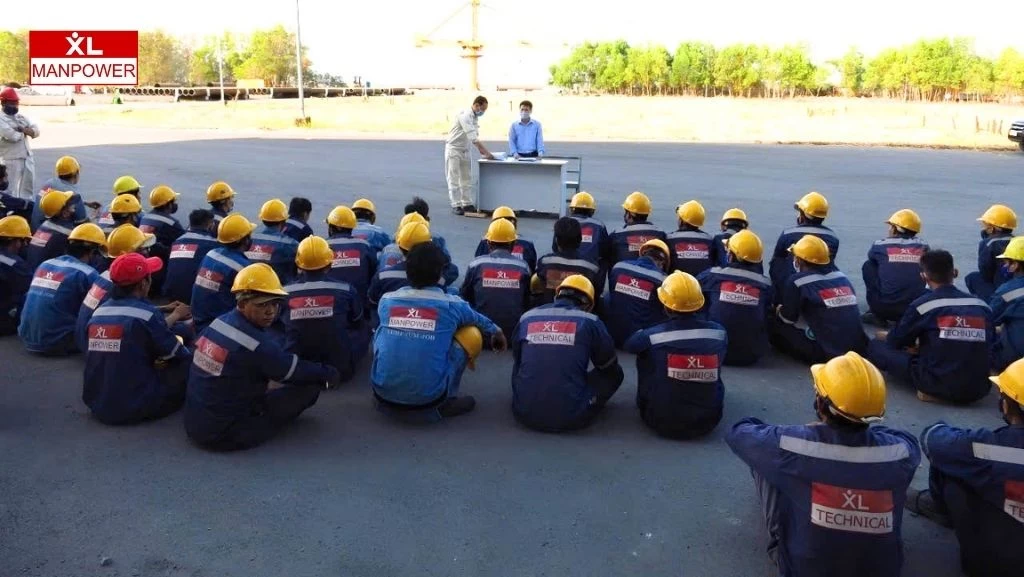
Why Can a Low Workforce Supply Quotation Cost Your Business More?
A lower quotation may help reduce initial expenses, but it does not necessarily minimize the overall cost of a project. If the workforce fails to meet performance expectations or project schedules are disrupted, businesses often incur indirect costs that far exceed the initial savings.
From a project management perspective, recruitment expenses represent only a small portion of the total project budget. What businesses should focus on is controlling the additional costs caused by an underqualified workforce or ineffective workforce management.
When choosing a workforce supplier based solely on price, companies may face several risks, including:
- Extended recruitment timelines that delay project schedules.
- Frequent workforce replacements due to unqualified or unsuitable personnel.
- Lower productivity and reduced operational efficiency.
- Increased overtime costs to recover lost project time.
- Higher management expenses resulting from additional supervision, retraining, and workforce coordination.
From a business management standpoint, these hidden costs are often significantly greater than the amount initially saved through a lower quotation.
For this reason, leading companies evaluate workforce suppliers based on their ability to deliver operational efficiency, reliable workforce performance, and long-term project success rather than simply comparing service prices.
How Does XL Manpower Help Businesses Optimize Workforce Supply Costs?
XL Manpower helps businesses optimize workforce supply costs by shortening recruitment lead times, providing high-quality talent, delivering professional workforce management, and supporting clients throughout every stage of project execution.
At XL Manpower, we believe that cost optimization is not about offering the lowest price—it is about delivering the highest return on every investment in human resources.
To achieve this, XL Manpower focuses on four core capabilities.
Building a high-quality candidate pool
XL Manpower maintains a diverse network of candidates, ranging from general laborers and skilled technical workers to engineers and project management personnel. Candidate profiles are screened based on experience, expertise, and industry-specific requirements, enabling businesses to significantly reduce recruitment time
Rapid Personnel Mobilization on Demand
For projects requiring additional manpower on short notice, deployment speed is a decisive factor. Thanks to professional recruitment and coordination processes, XL Manpower is capable of rapidly mobilizing personnel to meet business production and construction schedules.
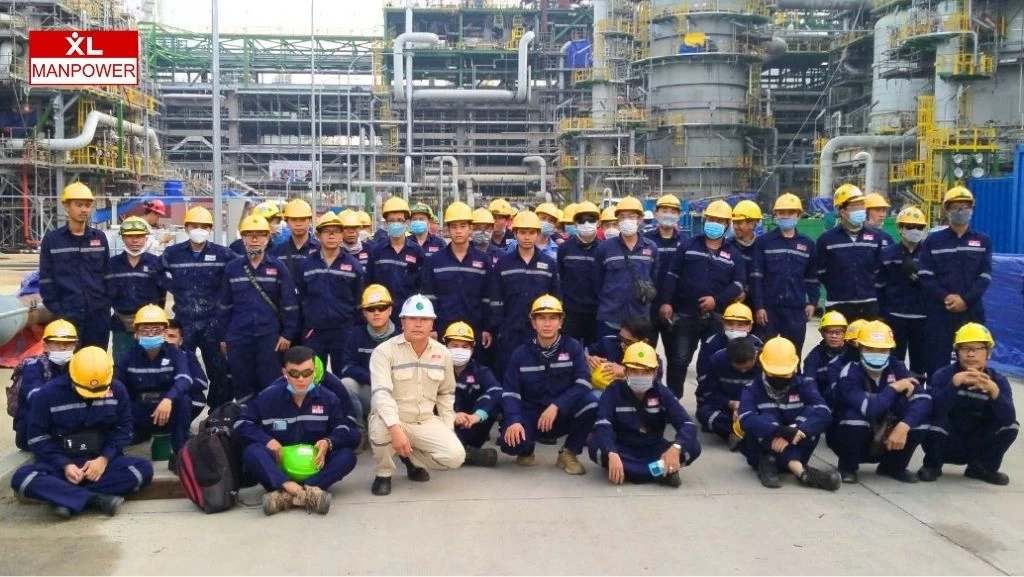
Comprehensive support throughout the implementation process
Unlike models that merely supply labor, XL Manpower continues to monitor, support, and collaborate with the client throughout the service period. Notably, for clients utilizing a workforce of 20 or more personnel, XL Manpower provides a complimentary Safety Supervisor on-site to assist with personnel management and proactively address potential risks, thereby ensuring the project proceeds smoothly. This approach facilitates the timely resolution of issues, maintains workforce stability, and alleviates the burden on the client’s internal HR department
Industry-Specific Expertise
XL Manpower provides workforce solutions across various sectors, including manufacturing, oil and gas, power plants, energy, mechanical engineering, industrial construction, and EPC projects. Our deep understanding of the specific requirements of each industry enables us to advise on tailored staffing strategies, helping to optimize costs and enhance operational efficiency.
Partnering with an experienced provider allows businesses to proactively manage their workforce, alleviate recruitment pressures, mitigate risks, and focus resources on core activities. This is why many enterprises are shifting their mindset from merely “purchasing services” to “selecting a strategic partner” for workforce solutions.
Guided by this approach, XL Manpower goes beyond simple staffing; we partner with businesses to develop workforce solutions aligned with every stage of their growth—ranging from short-term needs to large-scale projects demanding high levels of stability and specialized expertise.
Quotation and Implementation Process for Manpower Supply Services at XL Manpower
XL Manpower employs a structured process for consultation, quotation, and workforce deployment to help businesses rapidly secure suitable personnel, control costs, and ensure project timelines are met. Each solution is tailored to actual needs rather than relying on fixed pricing.
No two businesses have identical staffing requirements. Factors such as workforce size, professional qualifications, deployment timelines, work locations, and industry-specific characteristics directly influence both the staffing strategy and the associated costs.
Therefore, XL Manpower does not apply a standardized price list to all clients. Instead, we develop solutions customized for each project, enabling businesses to utilize their budgets efficiently and avoid unnecessary expenses.
Step 1: Needs Assessment and Analysis
XL Manpower’s consulting team engages directly with the client to clarify requirements regarding headcount, job roles, professional qualifications, deployment timelines, and project objectives.
Thoroughly analyzing needs at the outset enables the client to select the appropriate staffing solution while providing a foundation for a transparent and realistic cost proposal.
Step 2: Proposing Suitable Manpower Solutions
Following a needs assessment, XL Manpower proposes an optimal implementation plan tailored to the client’s scale and specific operational requirements.
Depending on the specific case, we can provide:
- General labor.
- Skilled workers.
- Technicians.
- Engineers.
- Project management personnel.
- Specialized teams for EPC, oil & gas, and power plant projects.
Our goal is not simply to supply the highest volume of personnel, but to provide the right people, at the right time, to meet specific job requirements.
Step 3: Submit a Transparent Quotation
XL Manpower’s quotation is tailored to the scope of services and the business’s specific needs.
All cost items are clearly outlined to facilitate easy evaluation and comparison. This approach minimizes unexpected expenses during implementation and lays the foundation for a long-term partnership.
Step 4: Implementation and Partnership with the Client
Once the plan is finalized, XL Manpower proceeds to deploy personnel in accordance with the committed schedule.
Throughout the implementation process, our team continues to collaborate with the client to monitor the workforce situation, assist in resolving any issues that arise, and ensure the labor force consistently meets project requirements.
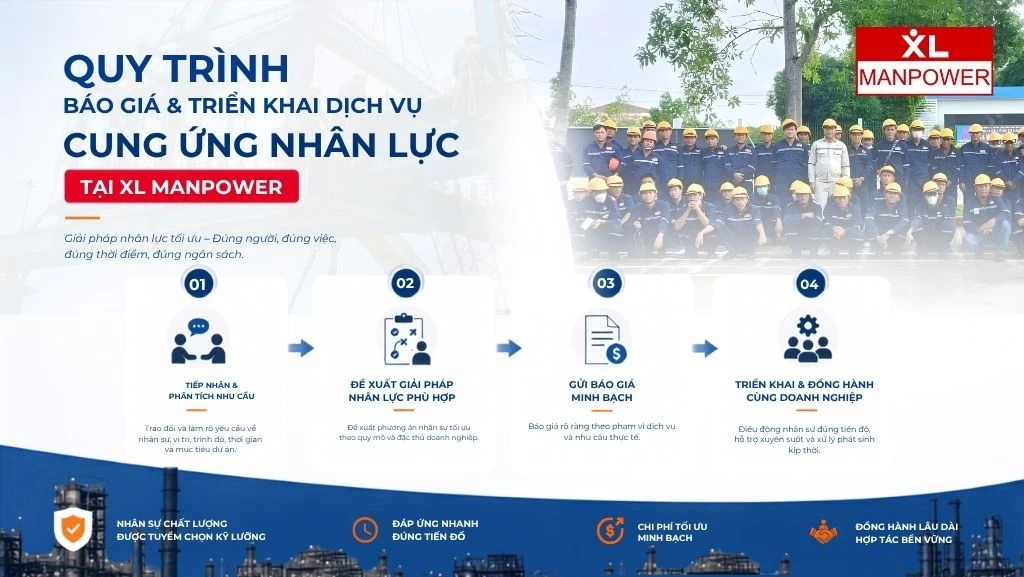
This is the difference between a mere labor provider and a professional workforce solutions partner.
What Criteria Should Businesses Use to Select a Manpower Supply Company?
A reputable staffing agency must not only be capable of rapid recruitment but also possess a stable pool of candidates, professional management processes, and relevant implementation experience within the client’s industry.
The current market features numerous staffing providers with varying scales and operational models. However, to select the right partner, businesses should consider the following criteria.
Practical implementation experience
A provider with experience in manufacturing, oil and gas, power plant, or EPC projects will have a thorough understanding of the specific personnel, scheduling, and workflow requirements of each sector. This expertise helps shorten implementation timelines and minimize risks during execution.
Stable candidate pool
The ability to respond quickly relies heavily on the size and quality of the candidate network. A company with a diverse talent pool is better positioned to proactively meet urgent staffing needs.
Clear Selection Process
Enterprises should prioritize providers that implement rigorous processes for screening applications, assessing competencies, and verifying candidate information prior to deployment. This approach enhances workforce quality and reduces post-recruitment costs.
Capacity for Long-Term Partnership
A workforce supply partner must offer more than just recruitment support; they need the capability to manage, coordinate, and resolve issues throughout the project lifecycle. This ensures operational stability, allowing the enterprise to focus on its core business objectives.
Drawing on extensive experience partnering with enterprises in manufacturing, oil and gas, power generation, energy, mechanical engineering, and EPC sectors, XL Manpower delivers flexible workforce solutions tailored to specific project scales and business growth goals. We go beyond mere personnel supply to collaborate on developing effective workforce strategies, thereby boosting productivity and minimizing operational risks.

Manpower supply costs are not merely a business expense but an investment in operational efficiency, project timelines, and workforce stability. A capable partner helps businesses optimize long-term costs through professional recruitment processes, high-quality personnel, and the ability to deliver on commitments.
If your business is seeking a manpower supply company with proven execution capabilities, transparent processes, and cost-optimization solutions, please contact XL Manpower to consult with our team of experts.
Thông tin liên hệ:
- Hotline: 0929 177 488
- Email: contact@xlmanpower.com | commercial@xlmanpower.com
- Website: https://xlmanpower.com