


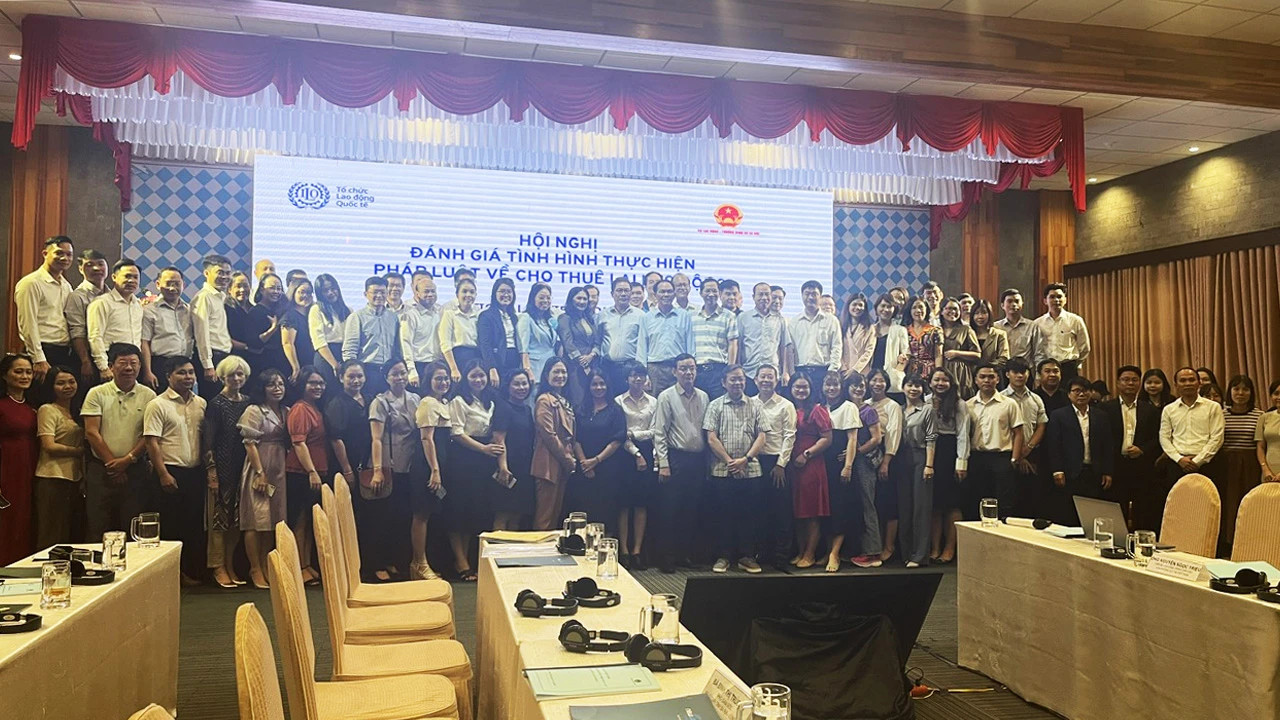
Based on recent data, Mr. Thanh stated that labor leasing is a unique business model that brings benefits to all parties involved but also poses potential risks to workers’ rights and welfare. Therefore, in the coming years, it will be necessary to improve the legal framework and strengthen state management in this field to minimize risks for employees.
Leased workers are primarily migrant workers from mountainous provinces who seek temporary employment during off-farming seasons, as well as students taking advantage of their summer breaks. Most of them have limited technical skills and industrial working discipline. These workers are typically recruited by labor leasing companies only when receiving workforce requests from client companies.
Ms. Ingrid Christensen, Director of the International Labour Organization (ILO) Office in Vietnam, noted that labor leasing enterprises are common worldwide. In Vietnam, this business model has experienced rapid growth over the past several years, particularly in provinces with large industrial zones. Labor leasing has become increasingly important in a market economy, enabling businesses to quickly respond to production and operational demands. It also creates employment opportunities for low-skilled workers, allowing them to gain experience, develop skills, and improve their employability.
Mr. Nong Van Dung, Deputy Director of the Department of Labor, Invalids and Social Affairs (DOLISA) of Dong Nai Province, stated that Dong Nai has more than 1.7 million workers, creating significant potential for labor leasing services. Currently, 80 licensed labor leasing companies operate in the province.
However, labor leasing still presents several risks and challenges. According to Ms. Christensen, this employment model may negatively affect skilled workers, workforce quality, and social security. Leased employees often do not participate in labor unions and therefore may lack adequate protection in disputes with employers. As a result, they are more vulnerable to income instability and social welfare risks.
Ms. Nguyen Thuy Linh, Head of the Labor Policy Division under the Department of Industrial Relations and Wages, Ministry of Labor, Invalids and Social Affairs, stated that over the past decade, competent authorities have issued a comprehensive legal framework governing labor leasing activities. Nevertheless, current regulations still contain certain limitations.
In the future, the Department will continue researching and improving policies to better align with international labor standards and practical requirements while protecting the interests of both employees and businesses. Ms. Linh emphasized that companies utilizing leased labor should strictly comply with legal regulations, particularly by working only with licensed labor leasing providers. She also recommended strengthening supervision over employee benefits and welfare policies and gradually reducing dependence on leased labor in favor of direct employment relationships.
Mr. Dung further highlighted that state management of labor leasing activities remains challenging. Many labor leasing companies are small-scale businesses with limited personnel and often fail to fully comply with legal requirements. Current labor laws do not require client companies to monitor wage payments, bonuses, social insurance contributions, or other employee welfare benefits provided by labor leasing firms.
Representatives from the Department of Labor, Invalids and Social Affairs of Bac Ninh Province also reported difficulties in managing labor leasing activities. One major issue is the existence of unlicensed operators or businesses disguising their activities through branches of licensed companies located in other provinces. These companies often lower service fees to gain competitive advantages, negatively impacting workers’ rights and benefits. Additionally, labor inspections and compliance monitoring are sometimes limited.
3,485 Enterprises Using Leased Labor
In the first six months of 2023, there were 3,485 enterprises nationwide utilizing leased labor services, including 1,922 businesses located within their registered provinces and 1,563 businesses operating across provincial boundaries.
The primary industries utilizing leased labor are electronics manufacturing and assembly, serving the supply chains of multinational corporations such as Samsung, Apple, LG, and Sony.
During the same period, more than 207,000 workers were employed through labor leasing arrangements across major provinces and cities, including Ho Chi Minh City, Dong Nai, Bac Ninh, Hanoi, Bac Giang, Ha Nam, and Thai Nguyen. Among them, Bac Ninh recorded the highest number of leased workers nationwide, with more than 41,000 employees.
Source: Dantri.com.vn